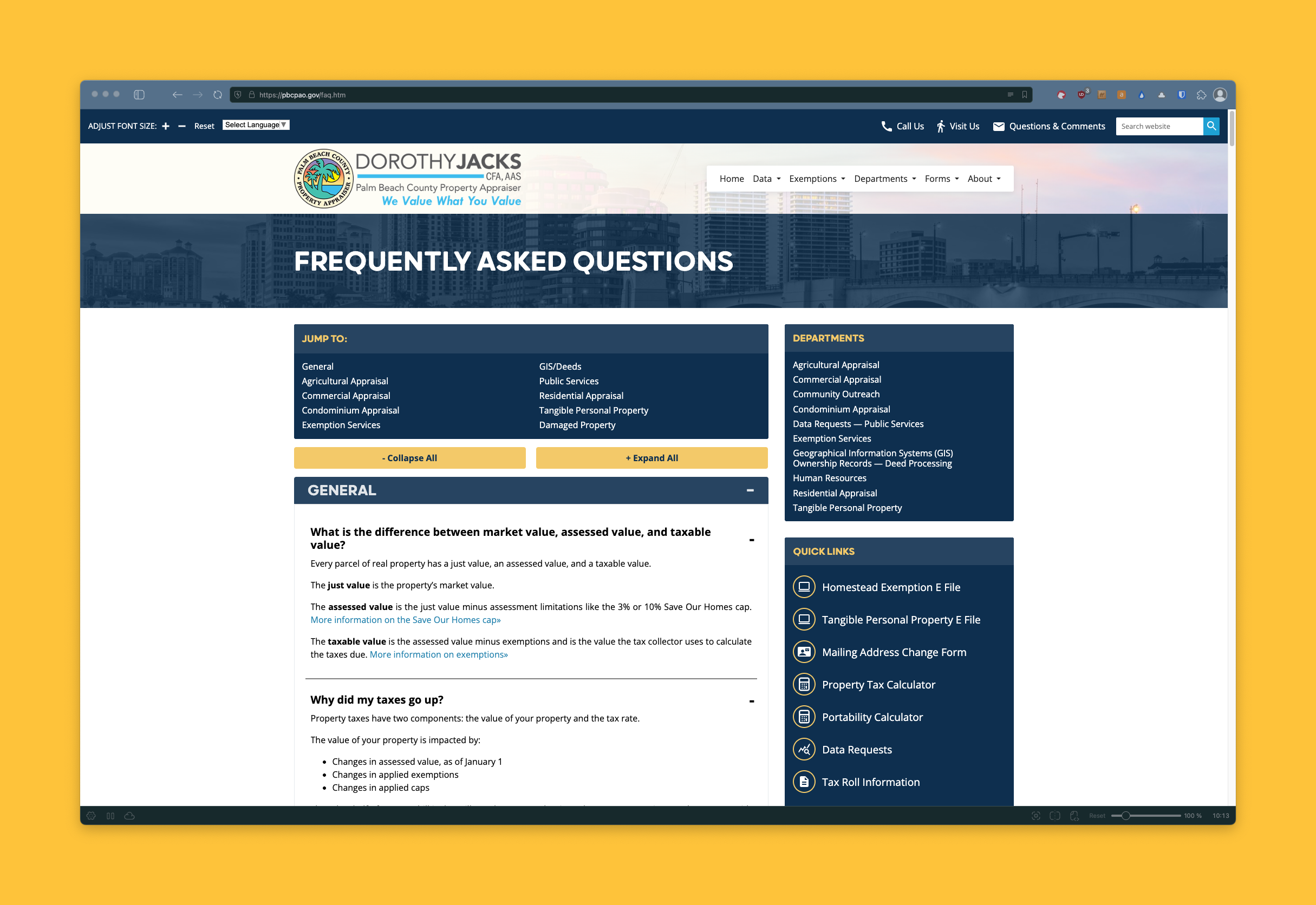
Project Overview
Client: Palm Beach Property Appraiser
URL: Palm Beach County Property Appraiser
Timeline: 2017 (Initial redesign), 2023 (Modernization update)
Role: Lead UX/UI Designer and Design Implementation Lead
Challenge: Redesign a highly popular and critical public service website while maintaining user familiarity and adding modern functionality
The Challenge
The Palm Beach Property Appraiser website served as a vital resource for the public, realtors, and real estate professionals. Despite its popularity and utility, the site faced several critical issues:
- Limited mobile responsiveness hindering access on smartphones and tablets
- Outdated visual design that didn’t reflect modern web standards
- Need for enhanced functionality while preserving existing beloved features
- High user expectations due to the site’s established reputation and frequent use
Research & Discovery
Quantitative Research
- Large-scale online survey deployed to all website visitors
- Universal reach strategy ensuring every user encountered the survey at least once
- Opt-in/opt-out mechanism to balance data collection with user experience
- Comprehensive usage analytics to identify most-used features and pain points
Qualitative Research
- Real estate power user panel consisting of industry professionals
- In-person workshops focused on feature enhancement and new functionality
- Stakeholder interviews with internal teams and public users
- Competitive analysis of similar government and real estate websites
Design Strategy
2017 Complete Redesign
Primary Objectives:
- Maintain feature accessibility and discoverability
- Implement responsive, mobile-first design
- Modernize visual aesthetics without alienating existing users
- Preserve user mental models and navigation patterns
Design Approach:
- Conservative enhancement rather than radical change
- Feature parity ensuring no functionality was lost
- Progressive disclosure to manage information complexity
- Cross-platform consistency across desktop, tablet, and mobile
Cross-Team Collaboration
- GIS team integration for mapping and geographic data visualization
- Application development coordination for database-driven features
- Design system creation to ensure consistency across all features
- Technical constraint navigation while maintaining design integrity
Implementation Challenges & Solutions
Technical Integration
- Multiple development teams requiring unified design language
- Legacy system constraints that needed design accommodation
- Performance optimization for large datasets and mapping features
- Browser compatibility across various government and professional environments
User Experience Continuity
- Familiar navigation patterns to reduce learning curve
- Feature location consistency to meet user expectations
- Search functionality enhancement for improved content discovery
- Information architecture optimization for better task completion
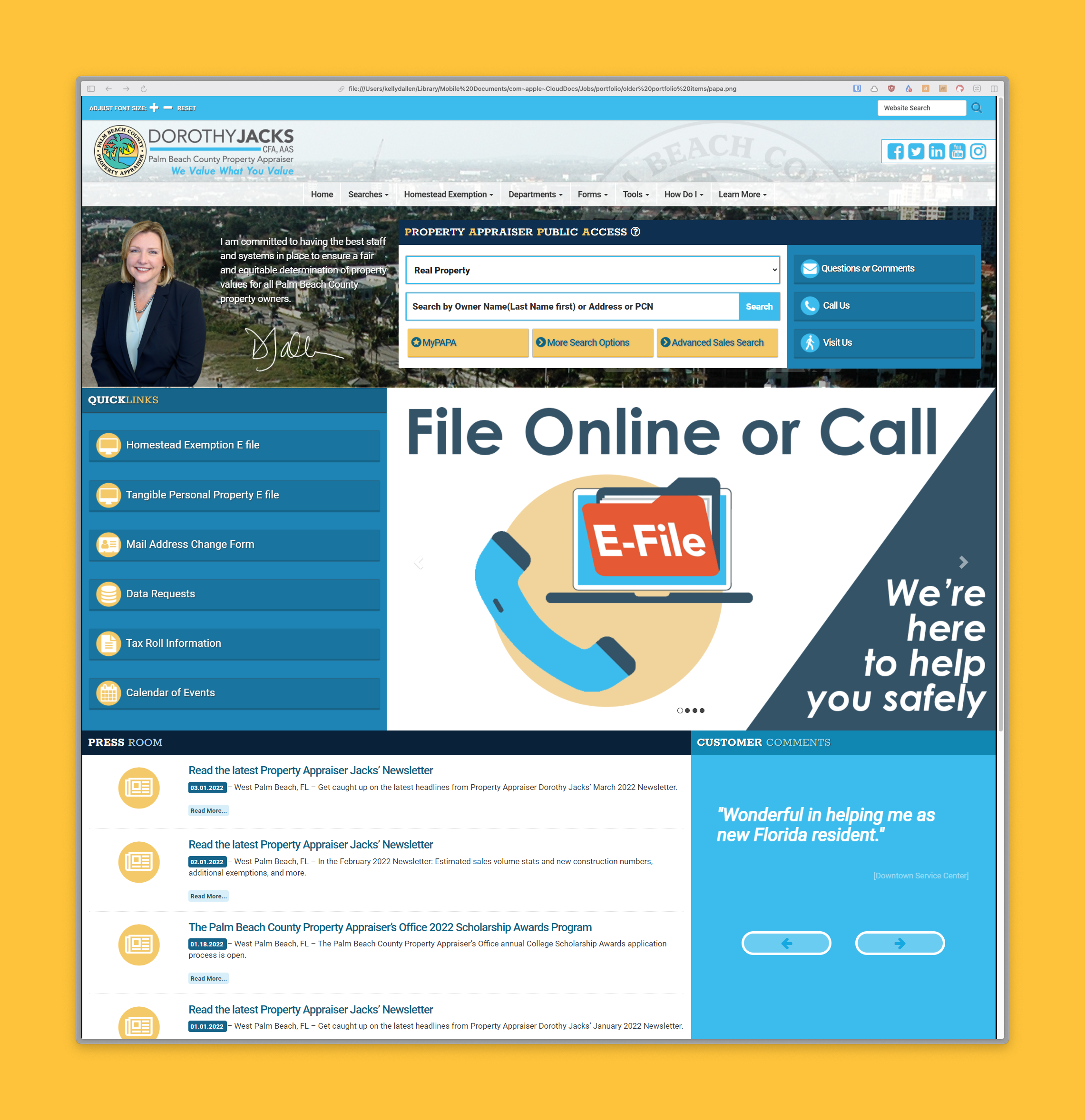
The 2017 iteration for PBC Property Appraiser
2023 Modernization Project
Evolved Approach
- Design agency partnership for fresh visual perspective
- Implementation leadership focusing on technical execution
- Design system adaptation to accommodate new visual language
- Accessibility compliance with enhanced WCAG standards
Key Improvements
- Contemporary visual design while maintaining usability
- Enhanced ADA compliance for broader accessibility
- Expanded feature set without compromising core functionality
- Improved mobile experience reflecting current usage patterns
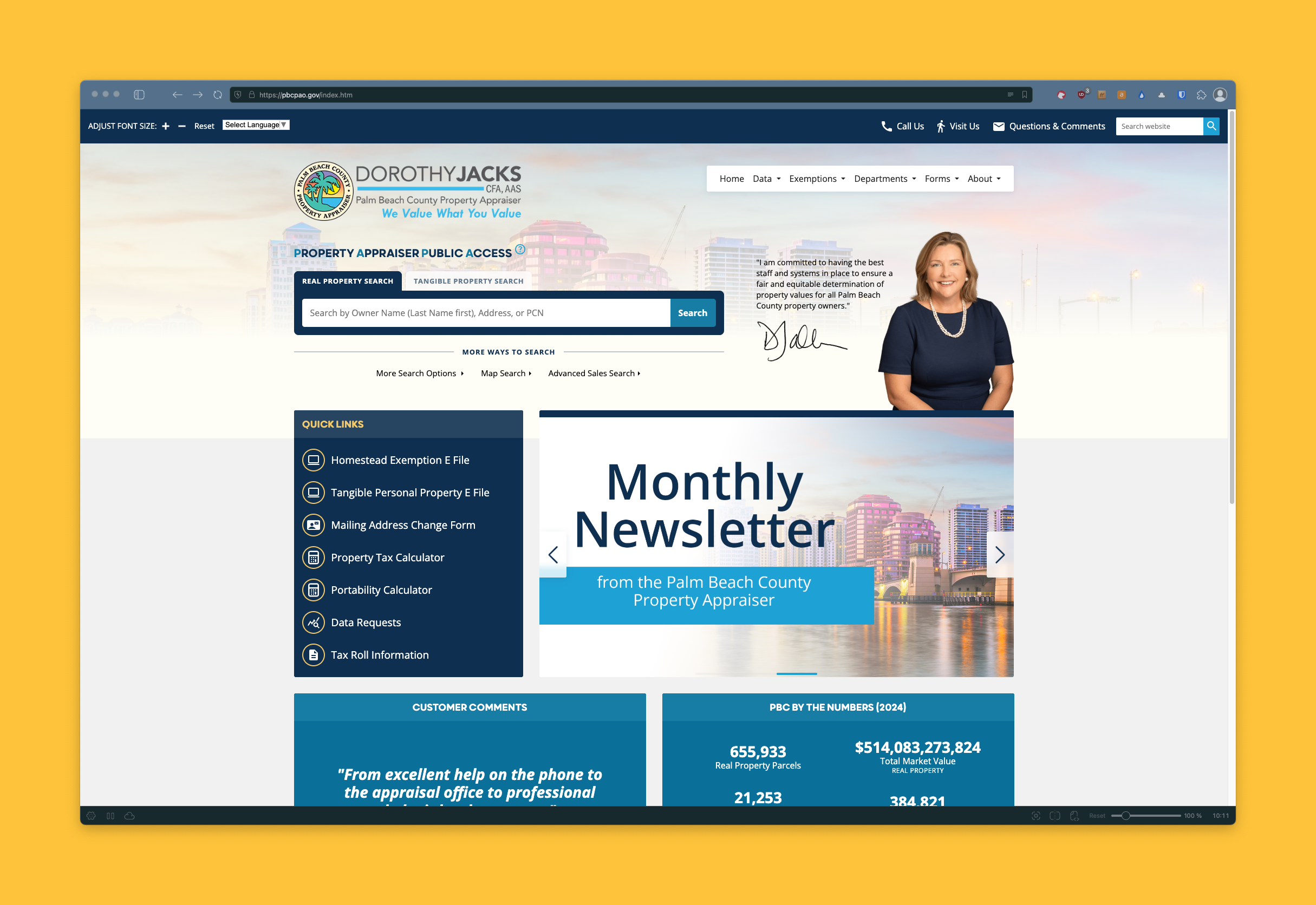
The 2024 Modernization
Results & Impact
Immediate Outcomes
- Universal acclaim from both public and professional users
- Multiple industry awards recognizing design and functionality
- Seamless user transition with minimal support requests
- Enhanced mobile usage reflecting responsive design success
Long-term Success Metrics
- Sustained user satisfaction leading to 2023 update request
- Continued high traffic across all user segments
- Feature adoption demonstrating successful enhancement integration
- Accessibility improvements expanding user base inclusivity
Key Learnings & Best Practices
User-Centered Design Principles
- Stakeholder involvement crucial for government/public service projects
- Quantitative and qualitative research provides comprehensive user insights
- Conservative change management essential for established, popular platforms
- Cross-team collaboration critical for complex, integrated systems
Technical Implementation Insights
- Design system consistency streamlines multi-team development
- Legacy system accommodation requires flexible design thinking
- Accessibility from the start more efficient than retrofitting
- Performance considerations impact design decisions significantly
Project Management Success Factors
- Phased approach allows for testing and refinement
- Clear communication channels between design and development teams
- User feedback integration throughout the development process
- Award recognition validates thorough, user-focused approach
Design Philosophy
This project exemplifies the principle that good government digital services require balancing innovation with familiarity. By prioritizing user needs, maintaining beloved functionality, and implementing modern design standards, we created a platform that serves its diverse user base effectively while positioning it for future growth and enhancement.
The success of both the 2017 redesign and 2023 modernization demonstrates that thoughtful, research-driven design can enhance public services while respecting established user behaviors and expectations.